Why Empower a Billion Lives? [Empower a Billion Lives]
On occasion, I like to return to first principles to remind myself—and all of you readers—why Empower a Billion Lives (EBL) was created in the first place and why this


On occasion, I like to return to first principles to remind myself—and all of you readers—why Empower a Billion Lives (EBL) was created in the first place and why this
From NVIDIA’s 800 V vision for the future, to Vertiv’s Director of Engineering Brian Heber’s Plenary talk “HVDC Distribution For Future AI Data Centers” [1], to the unending news reports
The rapid evolution of artificial intelligence (AI) workloads has fundamentally transformed the landscape of data center power infrastructure [1], [2]. Contemporary AI training clusters for Large Language Models (LLMs), such
At the recent APEC exhibition, Taiwan Semiconductor demonstrated some of its latest power electronics technologies. The company offers a selection of discrete semiconductors, as well as standard analog components. It
This decade has seen the restructuring of the global semiconductor supply chain. Market forces such as the race for electric vehicles (EVs) and artificial intelligence (AI) have clashed with geopolitical

One of the things I love most about camping in Yosemite is the towering granite outcroppings like El Capitan. Granite rates a seven on the Mohs hardness scale, making it

Weight reduction is a mission-critical challenge in UAV electric propulsion, where every gram saved directly impacts payload and endurance. This article demonstrates how GaN-based inverters, enabling switching frequencies up to
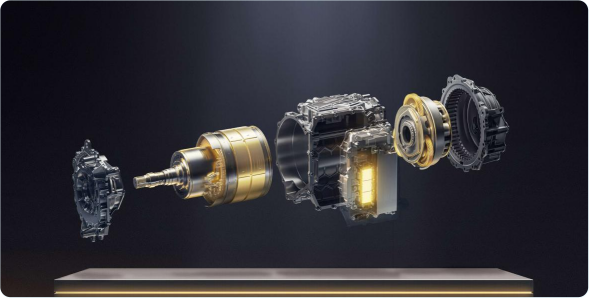
Silicon/silicon carbide (Si/SiC ) hybrid switches, which combine advantages of Si and SiC under varying loads, have been a preferred solution to achieve cost-performance trade-off for traction inverters [1], [2].
In the last three years since ChatGPT launched, interest in AI (Artificial Intelligence) and especially in LLMs (Large Language Models) has exploded—driving, if not innovation, plenty of buzz and the
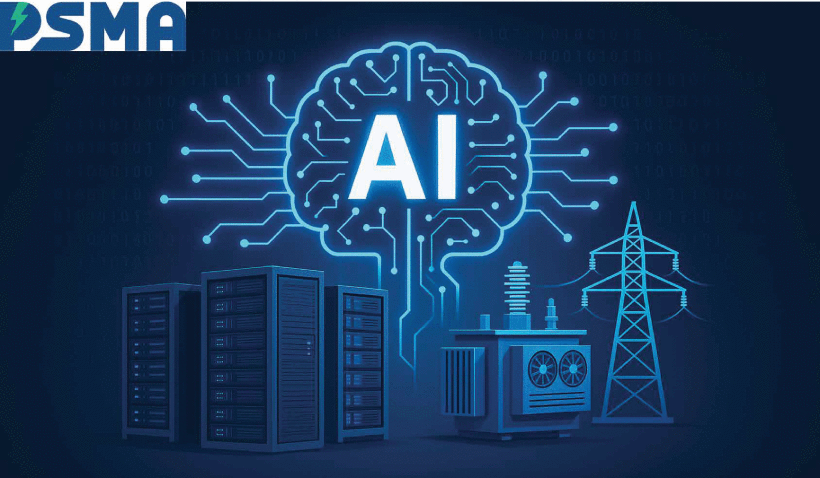
Artificial intelligence (AI) is not just a future trend; it is a current disruptor transforming how power is generated, delivered, and used. In power electronics, AI’s impact accelerates innovation while