Research Institutions

Research Institutions Directory

Learn more about various research institutions around the globe that specialize in the field of power electronics.

shutterstock 1079230778 768x512
About

Princeton University collaborates with various companies around the world to develop power electronics technologies.  Some technologies used by the University include LEGO (high-performance hybrid switched capacitor power architecture for VRMs), MagNet (data-driven methods for power magnetics modeling), MIMO (multiport energy routers for data center and smart homes), and Power + X – X (robotics, biomedical, sensors, communication).

Courses: Advanced Power Electronics; Principles of Power Electronics
Facilities: Princeton Power Electronics Research Lab

Focuses
  • Advanced Control and Artificial Intelligence: Artificial intelligence; Machine learning
  • Converters (AC-DC): Active rectifiers; Power buffer circuits; Single-stage AC-DC conversion; Three-phase AC-DC converters
  • Converters (DC-DC): DC-DC and resonant power conversion; Multiport converters; Switched capacitor circuits; Very-high-frequency DC-DC converters
  • Multilevel Converters: DC-DC and modular multilevel converters; Flying capacitor converters; Switched-capacitor multilevel inverters
  • Passive Components and Materials: Coupled inductors; Integrated magnetics; Magnetic core; Planar transformers; Soft magnetic materials

There are currently no research institutions in this IEEE Region.

Università degli Studi di Napoli Federico II panoramio (1) (1)
About

 The University of Naples Federico II develops several key technologies focusing on electric mobility, renewable energy integration, and smart energy systems.  One of the most impactful areas of innovation is the electric vehicle charging infrastructure that was co-developed in collaboration with industrial partners, which has led to the filing for multiple patents.  By having strong collaborations with several industry partners and leading research centers, the University enhances the impact and applicability of its research activities.

Courses: Converters, Electrical Machines, and Drives; Dynamics of Electromechanical Systems; Modeling of Electric Machines and Converters; Power Electronic Converters
Facilities: Multiple research and teaching facilities focus on power electronics and energy systems.  Key equipment includes a 2 kHz-core power electronic transformer, climatic chambers for battery testing, a dSPACE digital platform, electric vehicle charging systems, energy storage systems, fuel cell and photovoltaic emulators, motor drive test benches, multilevel converters, and programmable power supplies and electronic loads (Chroma).


Focuses
  • Motors and Drives: Permanent magnetic machines
  • Multilevel Converters: Cascaded H-bridge converters; Modular multilevel converter; Modulation
  • Power Quality and Grid Synchronization: Power quality
  • Renewable Energy: Energy harvesting; Maximum power point tracking; Micro-inverters; Perturbation methods; Photovoltaic power systems; Wind power generation
  • Storage and Electric Vehicles: Battery management systems; Electric vehicles; Fuel cells; State of charge; State of health; V2G

There are currently no research institutions in this IEEE Region.

ec4f46d2 541c 11e8 a252 5c54534dd764 1280x720 191214 (1)
About

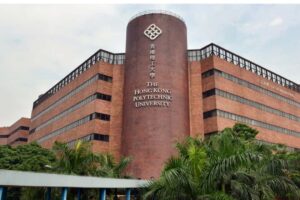
Hong Kong Polytechnic University closely collaborates with local and international partners to focus on improving the design, characterization, fabrication, and monitoring methods, thereby enhancing the reliability, efficiency, and sustainability of power electronics systems.

Courses: Advanced Industrial Electronics; Fundamentals of Power Electronics
Facilities: Circuits Research Lab; Reliable and Sustainable Power Electronics Group; Research Center for Electric Vehicles

Focuses
  • Advanced Control and Artificial Intelligence: Artificial intelligence; Machine learning; Model predictive control; System identification
  • Converters (DC-DC): Resonant power conversion; Soft-switching techniques
  • DC-AC Inverters: Multilevel inverters
  • DC Technologies and Utility Applications: HVDC converters; Solid state transformers
  • Discrete and Integrated Semiconductors: Device characterization; Gallium compounds: Insulated gate bipolar transistors; Packaging and integration; Power modules, MOSFETs, and semiconductor devices; Power supply in package; Semiconductor devices measurements, modeling, and packaging; Silicon carbide devices; Switch drivers; Thermal management; Wide bandgap devices
  • Emerging Topics: Aircraft power systems; Digital twin; Mission profile emulation
  • Motors and Drives: Finite element methods; Permanent magnet machines; Road vehicle electric propulsion; Variable speed drives
  • Reliability and Diagnostics: Condition monitoring; Fault diagnosis, location, and tolerance; Industrial power system reliability; Redundancy; Reliability estimation, modeling, and testing; Resilience; Semiconductor device reliability; Temperature measurement
  • Storage and Electric Vehicles: Electric vehicles; Energy storage; Wireless charging
  • Wireless Power Transfer and High-Frequency Converters: Resonant power conversion; Soft-switching converters

List Your Institution

Interested in having your institution listed here? Click below to submit the needed information.