

BRING A DISTINGUISHED LECTURER TO YOUR CHAPTER
PELS Members Who Are Experts in The Field of Power Electronics
Please note: The DL program does not support a DL giving a presentation or tutorial at a regular IEEE conference. The RDL program does not support an RDL giving a presentation or tutorial at a regular IEEE conference unless a local section or Chapter sponsors it.

Meet Our Current Lecturers
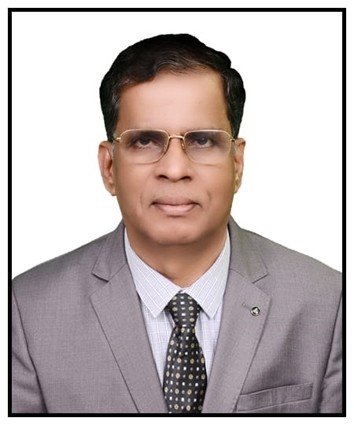
Manmath Kumar Badapanda (Senior Member, IEEE) is working as Head, RF Power Supplies Section at Raja Ramanna Centre for Advanced Technology, India. He has innovative contributions to the advancement of solid-state modular power supply technologies, having granted US patent no.10027122B2 and Indian patent no.436206, and nearly 500 numbers of his high-performance power supplies are in 24/7 operations with various Indian national facilities.
Read More
Work History:
1991-1993: Banaras Locomotive Works, Varanasi (India)
1993-Current: Raja Ramanna Centre for Advanced Technology (India)
Achievements:
– Fellow of Indian National Academy of Engineering (INAE) (since 2022)
– Fellow of The Institution of Engineers (India) (since 2021)
– Member of INAE Fellow selection committee (Electrical Engineering)
– Adviser of Union Public Service Commission, India (since 2003)
– Secured two patents and transferred several technologies to industries
– Vice Chair of IEEE Madhya Pradesh Section, India
– Chair of IEEE Power Electronics Society Madhya Pradesh Chapter
– Chair of IEEE Industrial Electronics Society Madhya Pradesh Chapter
– Chair of IEEE Industry Applications Society Madhya Pradesh Chapter
– Chair of IEEE Systems Council Madhya Pradesh Chapter
– 150 Peer-reviewed publications
– Delivered 50 invited talks worldwide
– Received awards including Best Paper Award at ECCE Asia-2025, Best PELS Chapter Award-2025, Outstanding Section Award-2023 from Region-10, Technologist of the Year-2023 from IEEE India Council, Research Excellence Award-2023 from Institution of Engineers, Department of Atomic Energy Excellence Awards from Government of India-2008, 2011, 2016, 2017.
Research Interests: Precision Regulated HVDC Power Supplies, Highly Reliable High Current Modular DC Power Supplies, Power Electronics and Multi-pulsed Converters
Presentations
High Voltage Dc Power Supply with Full Range 24 Pulsed Input and Ripple Free Output Capability
High Voltage Dc Power Supply with Full Range 24 Pulsed Input and Ripple Free Output Capability
Stringent performances are demanded from high voltage DC power supplies for biasing vacuum tube-based RF amplifiers and their performance requirements like low output ripple and low output stored energy are contradictory in nature, posing major challenges to the designer. A 36 kV, 24 A DC power supply is designed and developed, employing an uncontrolled 24-pulsed transformer rectifier at the front end to create an intermediate low voltage DC bus, feeding to 72 numbers of 500 V, 24 A controlled DC-DC power modules, outputs of which are connected series and combined synergistically, to achieve ripple free output, which is in operation with Indus-2, Synchrotron Radiation Source located at RRCAT, India since 2016. A combination of feed forward control along with an overriding feedback loop control has been adopted, which caters to the wide variations in the input voltages as well as allows setting the output voltage over a wider range. Its input section is completely independent of the output control section. Speaker will present the detail scheme, optimized control strategy, active redundancy incorporated and performance parameters achieved for 36 kV, 24 A DC power supply, which uniquely achieves full-range ripple-free output with 24-pulsed 11kV input simultaneously, in international scenario, irrespective of input voltage variations, output voltage requirements and number of faulty modules, based on which US patent no.10027122B2 and Indian patent no.436206 are granted to him as their sole inventor, technology transferred to multiple industries and adopted and the work is published in IEEE Transactions on Power Electronics. The adopted scheme neither needs any line filter at 11kV input nor needs any crowbar at 36kV output for protecting RF amplifiers and is suitable for MW level clean power processing applications. Due to its superior techno-commercial-social impacts, it has gained popularity for various research, scientific and industrial applications worldwide.
High Current Modular DC Power Supplies with High Availability for Solid State RF Amplifiers
High Current Modular DC Power Supplies with High Availability for Solid State RF Amplifiers
Highly reliable DC power supplies are demanded for biasing solid-state RF amplifiers. Normally, low voltage and low current DC power supplies, one for each RF amplifier module are employed for high power solid-state RF amplifiers, but the overall system reliability reduces drastically, with increase in the number of RF amplifier modules. Speaker will touch upon issues and methods used to estimate availability along with several steps to achieve high system availability for controlled DC power supplies. He will present 50 V, 700 A modular DC power supplies employed for biasing 60 kW, 505.8 MHz solid-state RF amplifiers in Indus-2 at RRCAT, India. Then he will present a 50V, 1950A modular water-cooled DC power supply, incorporating active redundancies and hot-swappable features in power modules as well as hot-redundant controllers, achieving system availability ≥ 99.9975% and stringent performances for biasing 40 kW, 650 MHz solid-state RF Amplifier at Fermilab, USA. It employs 16 number of 50 V, 150 A DC power modules, operated in parallel, including 3 number of active redundant power modules. It has both DC and pulse capabilities and very low dissipations to environment. A 50 V, 3300 A water-cooled DC power supply, to simultaneously feed 232 numbers of 500 W, 650 MHz power modules of 70 kW, 650 MHz solid state RF amplifiers will also be presented. Their faulty modules can be repaired outside and replaced ONLINE, so Mean-Time-To-Repair (MTTR) becomes zero, thereby increasing overall system availability to near unity. The beauty of the adopted scheme is that its faulty modules are isolated and healthy modules replaced ONLINE, without switching OFF of its power supply or RF amplifier, thereby achieving very high overall system availability and so this technology is likely to gain popularity worldwide, for advanced scientific, research and industrial applications demanding very high reliabilities.
Power Converters for High Power RF Amplifiers for Particle Accelerators
Power Converters for High Power RF Amplifiers for Particle Accelerators
Particle accelerators are often treated as complex machines ever built by mankind and have innumerable applications worldwide, in almost all branches of science and technology. They employ both vacuum tube and solid-state RF amplifiers, to feed RF power to cavities for providing necessary gap voltages to boost energy of the particles. Vacuum tube-based RF amplifiers demand stringent performances like low output ripple and low stored energy from their HVDC bias power supplies, which are often contradictory to each other, posing major challenges to the designers. Again, solid-state RF amplifiers demand very highly reliable low voltage DC bias power supplies, as the overall reliability of solid-state RF amplifiers system reduces drastically, with increase in the number of RF amplifier modules.
Speaker has extensively worked on power converters for RF amplifiers and nearly 500 numbers of his high-performance DC power supplies are in 24/7 operations with various Indian national facilities. He will present -20 kV, 5 A DC power supply for 60 kW, 505.8 MHz klystron amplifier; -100 kV, 25 A DC power supply for 1 MW, 352.2 MHz klystron amplifier and -36 kV, 24 A DC power supply for 80 kW, 505.8 MHz IOT amplifier, employed at RRCAT, India. Then he will present 50 V, 700 A modular DC power supplies employed for solid-state RF amplifiers at RRCAT, India and 50 V, 1950 A water-cooled modular DC power supplies, with active redundancies and hot swappable features and hot redundant controller to achieve system availability >99.9975% for biasing 40 kW,650 MHz SSRA solid-state RF amplifiers at Fermilab, USA. These power converters technologies are proven reliable during their 24/7 and 365 days of operations with various Indian national facilities and are very much useful for particle accelerator communities and various industrial, scientific and research applications worldwide.
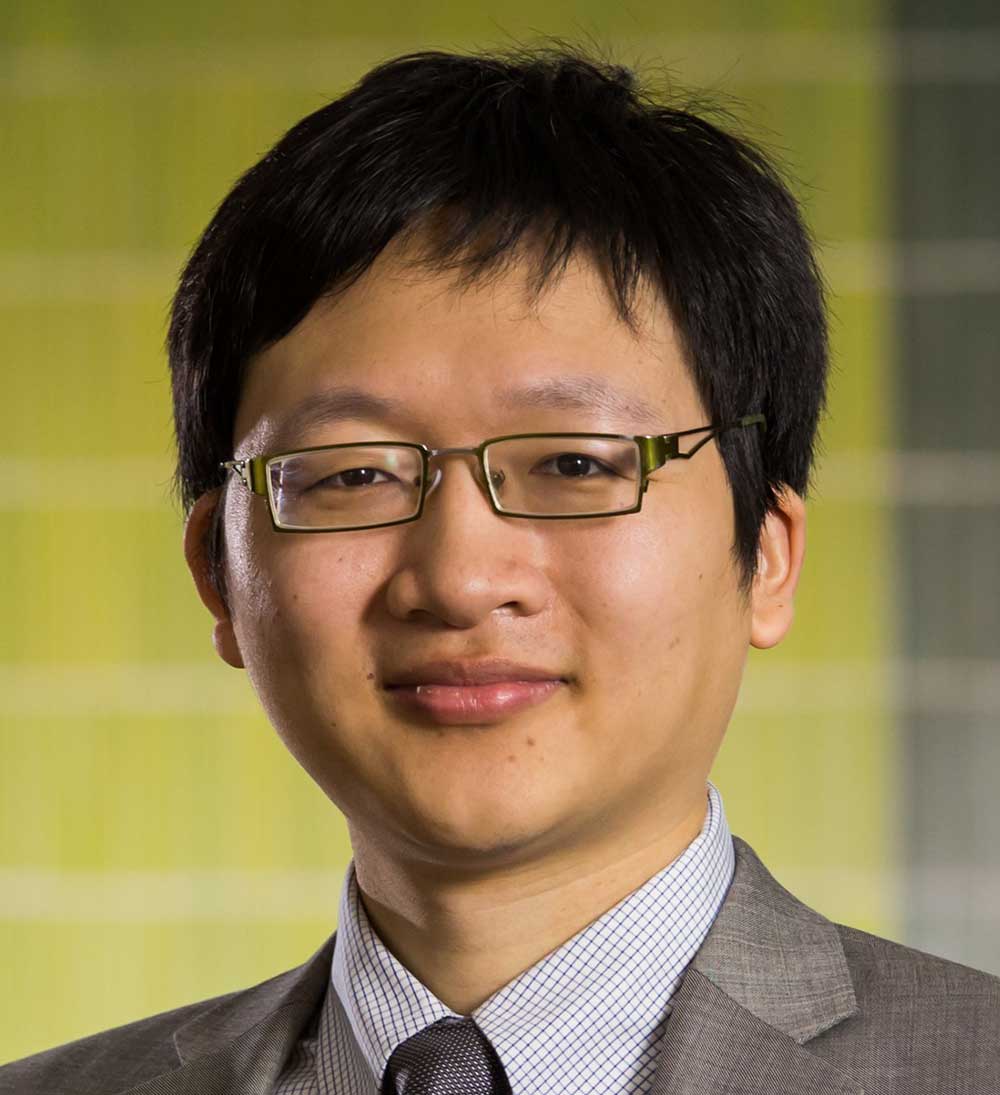
Minjie Chen (Senior Member, IEEE) received his B.S. in Electrical Engineering from Tsinghua University (China) in 2009 and his Ph.D. in Electrical Engineering and Computer Science from Massachusetts Institute of Technology (USA), both with honors. Dr. Chen is currently the Vice Chair of PELS TC 10 (Design Methodologies) and launched the PELS MagNet Challenge in 2023.
Read More
Achievements:
– Best Conference Paper Awards: 3D-PEIM, APEC, COMPEL, ECCE, ICRA, IROS, OCP
– IEEE PELS Richard M. Bass Outstanding Young Power Electronics Engineer Award (2023)
– IEEE Transactions on Power Electronics Prize Paper Award (2016-2017, 2020-2022)
– Massachusetts Institute of Technology EECS D.N. Chorafas Ph.D. Thesis Award (2016)
– NSF CAREER Award (2019)
– Princeton Engineering Commendation List for Outstanding Teaching (2019)
– Princeton Keller Center Innovation Forum (2019)
– Princeton SEAS Junior Faculty Award (2022)
Research Interests: Data-driven methods, Design of high-performance power electronics for critical applications, High-frequency power electronics, Power architecture, Power magnetics
Presentations
Power Electronics for High-Performance Computing: Architecture and Magnetics Co-Design
Power Electronics for High-Performance Computing: Architecture and Magnetics Co-Design
The energy demand of future computing gives rise to new challenges in high-current voltage regulator modules (VRMs). This talk reviews the recent developments in architecture and magnetics for 48-V VRMs, focusing on achieving high efficiency, high power density, high control bandwidth, and compact system packaging. The strengths and weaknesses of many representative solutions are compared. We highlight the key opportunities and challenges and present comprehensive co-design guidelines for 48-V VRM architecture and magnetics.
MagNet Project and Data Driven Methods for Power Magnetics Modeling
MagNet Project and Data Driven Methods for Power Magnetics Modeling
This talk presents why, how, and what we can do to perform power magnetic modeling with machine learning. We first introduce an open-source database – MagNet – which hosts a large amount of experimentally measured excitation data for many materials across a variety of operating conditions, and then demonstrate a few successful neural network-based power magnetics modeling tools for modeling core losses and B-H loops. Neural network models are found effective in compressing the measurement data and show generalities in predicting magnetic characteristics that do not exist in the training data.
Models and Design Methods for Complex Multi-Winding Transformers and Coupled Inductors
Models and Design Methods for Complex Multi-Winding Transformers and Coupled Inductors
Multi-winding transformers and coupled inductors are critical building blocks for a wide range of power electronics applications ranging from isolated dc-dc converters to CPU VRMs. This talk presents a systematic approach to modeling complex multi-winding magnetic structures including (1) a systematic approach to modeling impedance and current distribution in planar magnetics; (2) a unified model to quantify the performance benefits of multiphase PWM coupled inductors; and (3) a range of design considerations and optimization tools for high performance power electronics systems enabled by complex power magnetic structures.
Differential Power Processing and Multi-Input-Multi-Output Energy Systems
Differential Power Processing and Multi-Input-Multi-Output Energy Systems
This talk covers differential power processing and multi-input-multi-output power electronics design. We will first review the analytical models and performance limits of differential power processing, followed by the design example of an ultra-efficient differential power processing system for data storage servers. The design considerations for a few multi-input-multi-output (MIMO) energy systems developed based on multi-active-bridge (MAB) converters will then be presented. The MIMO and MAB energy router opens new design opportunities for a wide range applications.
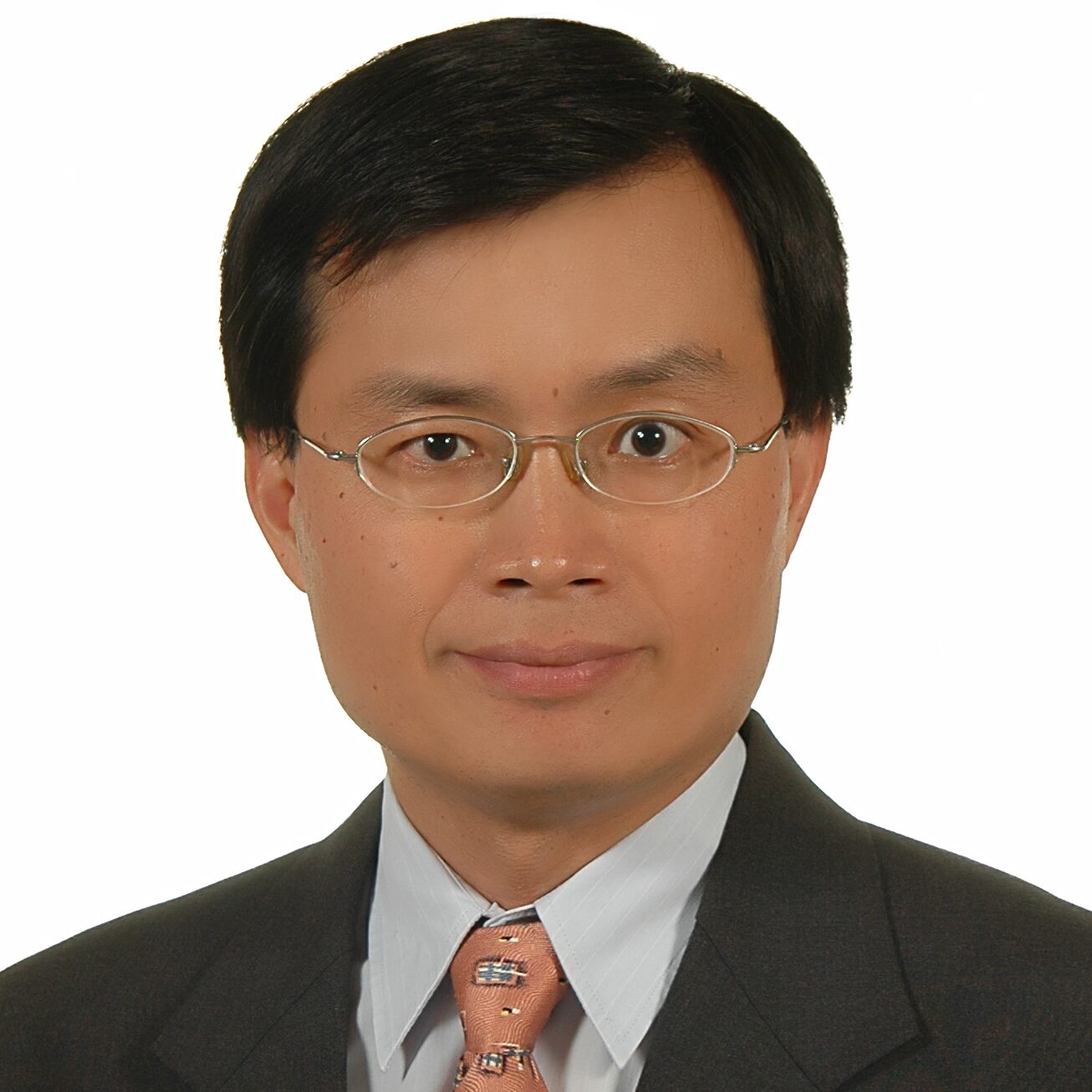
Yaow-Ming Chen (Fellow, IEEE) received his B.S. degree from National Cheng-Kung University (Taiwan) in 1989 and his M.S. and Ph.D. degrees from the University of Missouri (USA) in 1993 and 1997, respectively, all in electrical engineering. Dr. Chen is currently an Associate Editor for several IEEE journals.
Read More
Work History:
1997 – 2000: I-Shou University (Taiwan)
2000 – 2008: National Chung Cheng University (Taiwan)
2008 – Current: National Taiwan University (Taiwan)
Achievements:
– Associate Editor for IEEE Journal of Emerging and Selected Topics in Power Electronics and IEEE Transactions on Circuits and Systems II
– Editor in Chief for IEEE Transactions on Power Electronics (2019 – 2024)
– Holds 10 U.S. patents
– Published over 150 IEEE journal conference papers
Research Interests: Power electronic converters, Renewable energy systems
Presentations
Multi-Input Converters for Hybrid Renewable Energy Power Generation Systems
Multi-Input Converters for Hybrid Renewable Energy Power Generation Systems
This lecture presents the design and implementation of multi-inut converters by integrating multiple renewable sources, such as solar and wind, into a unified power generation system. By utilizing advanced control strategies, the multi-input converters efficiently manage the intermittent nature of renewable energy inputs, ensuring optimal performance and energy harvesting. The presentation will introduce the development of multi-input converter circuit topologies and the control of multiple power flows. Attendees can learn about the technical aspects of the multi-input converter with effective control in maximizing the output power of different intermittent renewable energy sources.

Frans Dijkhuizen (Senior member, IEEE) is a Research Fellow at Hitachi Energy Research with 25 years’ industrial experience in research and development in high-power electronics for HVDC and power quality solutions. Dr. Dijkhuizen received his Ph.D. in Electrical Engineering from the Eindhoven University of Technology TU/e, the Netherlands.
Read More
Work History:
2001- 2019: ABB Corporate Research (Sweden)
2019 – Current: Hitachi Energy Research (Sweden)
Achievements:
– Privileged to have contributed to pioneer HVDC Light technology early on
– SVC Light technology development
– Numerous technology development projects, prototyping, task forces, feasibility studies in various fields of application, strategy developments for HVDC
– Principle Scientist 2006, Senior Principal Scientist 2012, Research Fellow 2020
– Internal Inventor of the year award 2019
– Associate Editor for the IEEE Transactions on Power Electronics
– Vice-Chair for IEEE PELS International Technology Roadmap for High-Power Electronics for Modern Energy Grids (ITRG)
– Vice-Chair IEEE PELS TC8
– Working group member of IEC TC115-WG15
Research Interests: high-power electronics for HVDC and power quality solutions
Presentations
Transmission Grid HVDC and Power Quality Solutions
Transmission Grid HVDC and Power Quality Solutions
In the next decades a threefold of electric transmission capacity is required to follow the electricity demand growth. Of central importance is to secure power balance, keep synchronism and return fast to steady state conditions after disturbances. This talk is about enabling technologies HVDC and STATCOM that mitigate AC grid operational constraints, unlocking grid capacity and enhance power system stability, on the course for more transmission. The talk will give a technology update, advances and future technology outlook into DC grid solutions and future scenarios for energy grid technology include National Distributed Hubs, Centralised Hubs, and Meshed Offshore Grids, emphasizing their benefits in strengthening energy markets and integrating renewables.
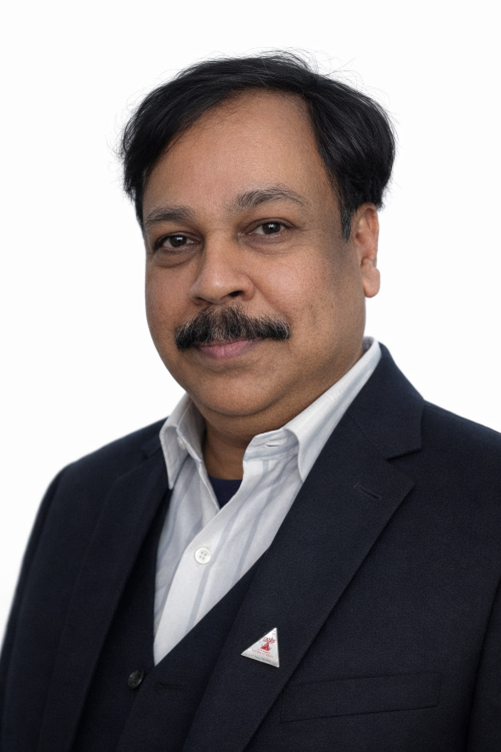
Dr. Sanjeet K. Dwivedi (Senior Member, IEEE) is currently a senior consultant working in Green Energy Sector in Denmark and also an Adjunct Professor in the Department of Electrical Engineering at ABV–Indian Institute of Information Technology (ABV-IIIT), India, since January 2024.
Dr. Dwivedi received his Ph.D. in Power Electronics and Drives from IIT New Delhi, an M.Tech. in Power Apparatus and Electric Drives from IIT Roorkee (Gold Medal), and an M.Sc. in Engineering in Innovation and Business from the University of Southern Denmark. He has also completed Executive Leadership Education at MIT, Boston.
Read More
Work History:
– Everfuel A/S (Denmark)
– Danfoss Power Electronics A/S, Global R&D (Denmark)
Achievements:
– 45+ technical publications
– 15 international patents
– Associate Editor of IEEE Transactions on Industrial Electronics
– Danfoss “Man on the Moon” Global Innovation Award
– IETE–Bimal Bose Award, IE(I) Merit Award
Research Interests: power electronics, electric drives, and green energy systems
Presentations
Power Electronics as a Key Enabler for High-Efficiency Green Hydrogen Production
Power Electronics as a Key Enabler for High-Efficiency Green Hydrogen Production
The global transition toward a carbon-neutral energy ecosystem has positioned green hydrogen as a cornerstone technology for deep decarbonization across industry, transportation, and power systems. While water electrolysis powered by renewable energy sources offers a sustainable hydrogen pathway, its large-scale and cost-effective deployment critically depends on advanced power electronics converters capable of managing the variability and intermittency of renewable energy.
This lecture examines the fundamental and practical role of power electronics in enabling efficient, reliable, and economically viable green hydrogen production. It explores converter topologies—including AC–DC rectifiers, DC–DC converters, and grid-interfacing inverters—and their impact on electrolyzer performance, system efficiency, power quality, and reliability. Advanced control and modulation strategies are discussed to address grid integration challenges, improve dynamic response, and extend electrolyzer lifetime. The lecture also evaluates techno-economic considerations, environmental benefits, and industrial case studies from large-scale green hydrogen installations, providing valuable insight into real-world implementation.
Learning Outcomes
- Understand the role of power electronics in green hydrogen production systems
- Identify suitable converter topologies for electrolyzer-based applications
- Analyze control strategies for handling renewable energy variability
- Evaluate efficiency, cost, and reliability trade-offs in hydrogen production systems
- Gain insight into industrial-scale implementation challenges and solutions
Minimum Voltage Vector Injection: A Simple and Robust Sensorless Control Technique for PMSM Drives
Minimum Voltage Vector Injection: A Simple and Robust Sensorless Control Technique for PMSM Drives
Permanent Magnet Synchronous Motors (PMSMs) are widely adopted in high-performance drive applications; however, sensorless operation at zero and low speeds remains challenging due to poor observability and sensitivity to parameter variations. Conventional methods often require complex signal injection and filtering, leading to increased computational burden and reduced control bandwidth.
This lecture presents a minimum voltage vector injection method that enables accurate, robust, and computationally efficient sensorless control of PMSM drives at low and zero speeds. The method requires injection of only one voltage vector for rotor position estimation and eliminates the need for high-frequency signal extraction filters, thereby preserving the bandwidth of the inner current control loop. An enhanced approach using two opposite voltage vectors is also introduced to mitigate inverter voltage errors. The lecture provides a systematic design methodology and compares the proposed technique with established sensorless methods using theoretical analysis and experimental validation.
Learning Outcomes
- Understand the challenges of low-speed sensorless PMSM control
- Learn the principle of minimum voltage vector injection for position estimation
- Design a low-complexity sensorless control algorithm with minimal computation
- Compare the proposed method with conventional sensorless techniques
- Apply the method to achieve reliable zero- and low-speed PMSM operation
Simple and Robust Parameter Estimation Techniques for Induction Motors and PMSMs
Simple and Robust Parameter Estimation Techniques for Induction Motors and PMSMs
Accurate machine parameter estimation is essential for achieving high-performance, efficient, and reliable operation of electric drive systems. Conventional parameter identification methods often require complex testing procedures or extensive signal processing, limiting their industrial applicability.
This lecture introduces simple, practical, and robust parameter estimation methods for both three-phase induction motors (IMs) and permanent magnet synchronous motors (PMSMs). The first part presents a novel method for determining IM equivalent circuit parameters by regulating stator current to a constant level and analyzing voltage response dynamics, enabling fast and accurate characterization without specialized test setups. The second part focuses on online estimation of permanent magnet flux linkage in surface-mounted PMSMs using an injected zero-voltage vector, effectively eliminating inductance effects and minimizing inverter nonlinearity errors. The methods are compatible with both sensored and sensorless Field-Oriented Control (FOC) schemes and are validated through experimental results.
Learning Outcomes
- Understand the importance of accurate machine parameter estimation
- Learn a simple method for identifying induction motor equivalent circuit parameters
- Apply online PM flux linkage estimation for surface-mounted PMSMs
- Integrate parameter estimation techniques with FOC-based control systems
- Improve drive performance, efficiency, and robustness using accurate parameters

Biography coming soon.
Read More
Presentations
Snubberless Naturally Clamped Soft-switching Bidirectional Current-fed DC/DC Converters
Snubberless Naturally Clamped Soft-switching Bidirectional Current-fed DC/DC Converters
Description coming soon.
Partial Resonant Based Soft-switching Current-fed DC/DC Converters
Partial Resonant Based Soft-switching Current-fed DC/DC Converters
Description coming soon.
Electrolytic Capacitorless Pulsating DC Link Three-phase Inverter
Electrolytic Capacitorless Pulsating DC Link Three-phase Inverter
Description coming soon.
Fundamental Device Switching Frequency Control of Multilevel Inverters for Medium Voltage Drives
Fundamental Device Switching Frequency Control of Multilevel Inverters for Medium Voltage Drives
Description coming soon.
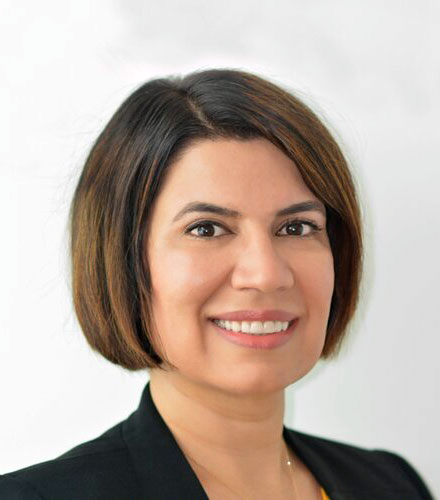
Maryam Saeedifard (Senior Member, IEEE) received her B.S. and M.S. degrees from Isfahan University of Technology (Iran) in 1998 and 2002, respectively, and Ph.D. degree from the University of Toronto (Canada) in 2008, all in electrical engineering. Dr. Saeedifard is currently an editor for various IEEE Transactions, including the IEEE Transactions on Power Electronics.
Read More
Work History:
2007-2008: ABB Corporate Research Center (Switzerland)
2010-2013: Purdue University (USA)
2014-Current: Georgia Institute of Technology (USA)
Achievements:
– Served on technical program committees for PELS and IEEE conferences (APEC, IECON)
Research Interests: Applications of power electronics in power systems and transportation systems
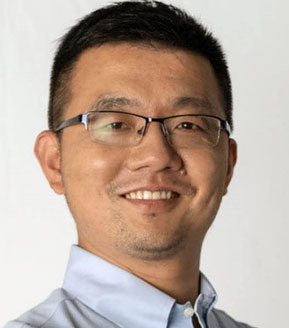
Xu She (Senior Member, IEEE) received his B.Sc. and M.Sc. degrees from Huazhong University of Science and Technology (China) in 2007 and 2009, respectively, and Ph.D. degree from North Carolina State University (USA) in 2013, all in electrical engineering. Dr. She is currently a Vice Chair for the PELS Standards Committee and IEEE P3105 standard working group as well as an Associate Editor for various IEEE publications.
Read More
Work History:
2013-2022: General Electric and Carrier Corporation (USA)
2023-Current: Lunar Energy (USA)
Achievements:
– GE Whitney Technical Achievement Award (2018)
– IEEE IAS Andrew W. Smith Outstanding Young Member Achievement Award (2017)
– IEEE IES Rudolf Chope R&D Award (2022)
– IEEE Region 1 Industry Technological Innovation Award (2021)
– Organizing committee member for IEEE ECCE
– Published over 75 papers, 40 patent families, and three book chapters
Presentations
Silicon carbide power conversion systems for industrial applications
Silicon carbide power conversion systems for industrial applications
This lecture presents silicon carbide technology and its application for industrial applications. Critical barriers of applying silicon carbide power devices will be presented and novel solutions to overcome those barriers will be illustrated. Specifically, this lecturer will cover the technical aspects of advanced topology, thermal management, component design, etc. from industry design point of view. A few published design examples will be shared covering general purpose silicon carbide power converter as well as specific designs for solar and energy storage applications.
Solid state transformers: journey from R&D to recent standard development
Solid state transformers: journey from R&D to recent standard development
Solid state transformer is an emerging technology that replaces the traditional line frequency transformer with additional functions and intelligence. It has gained significant attention in the past 10 years with number of publications increased by more than 25x. Around the world, there are many on-going demonstration projects for different applications, such as smart grid integration, EV fast charger, wind and solar power conversion, etc. This lecture provides an overview of development effort of solid-state transformers, a journey starting from early-stage R&D to recent standard development effort (IEEE P3105) within IEEE power electronics society.
System thinking and its role in innovation of power electronics dominated industrial systems
System thinking and its role in innovation of power electronics dominated industrial systems
This lecture will share the philosophy of system thinking and its role in innovation of power electronics and systems. In the first part, an innovation framework will be presented to show how a well-rounded thought process can lead to meaningful innovation. The second part will introduce innovation on power electronics design from equipment manufacturer point of view, with special focus on advanced silicon carbide power conversion technologies for industrial applications. The third part will focus on system innovation and explore how to leverage power electronics technologies to reinvent system architectures towards carbon neutral society.
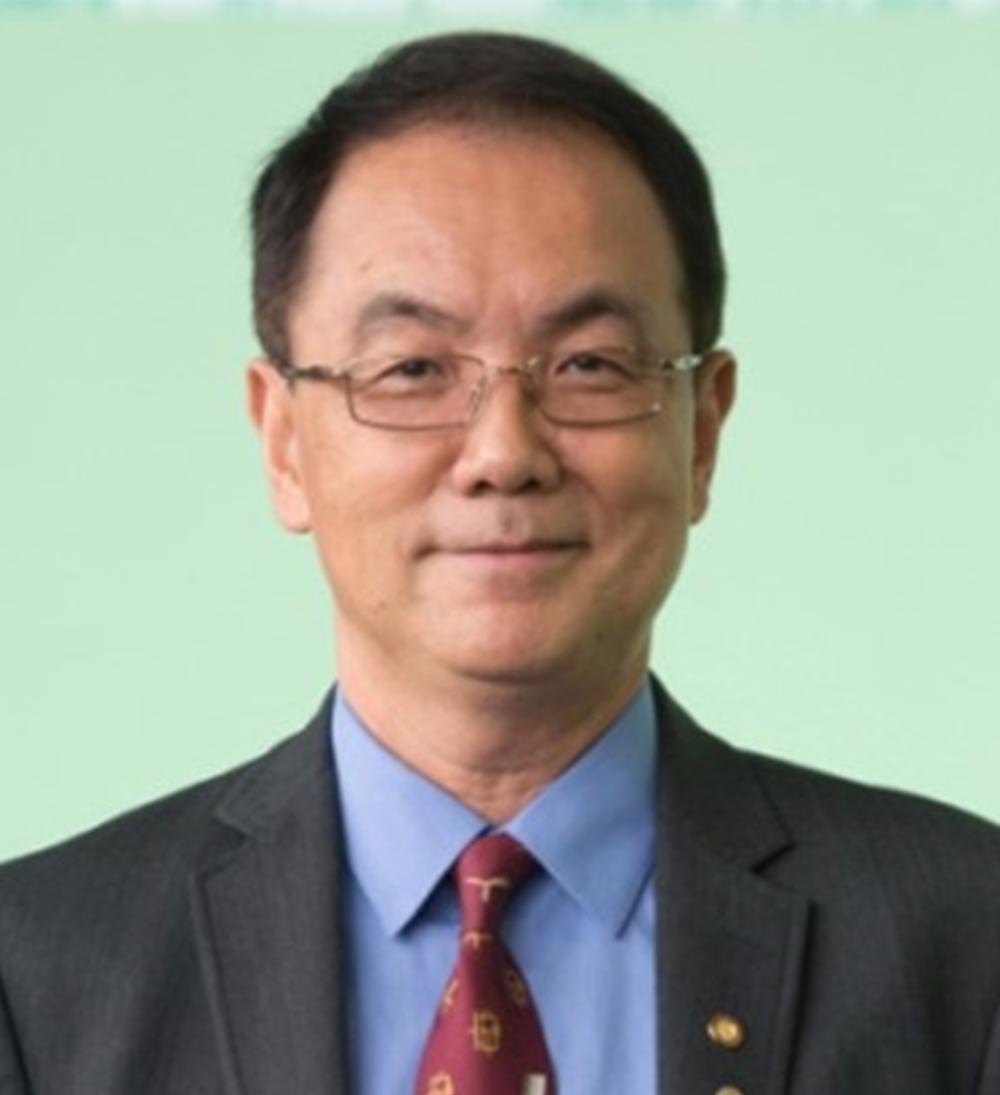
Don Tan (Fellow, IEEE) received his Ph.D. from Caltech (USA). Dr. Tan is currently the President of teh IEEE Transportation Electrification Council, Chair of the IEEE Fellow Advisory and Oversight Committee, and Vice Chair of the IEEE Industry Engagement Committee.
Read More
Achievements:
– Delivered more than 80 keynotes/invited global presentations
– Developed electronics that performed flawlessly on the James Webb Space Telescope
– Developed IEEE/ANSI Standards 1515/1573
– Developed hundreds of designs and thousands of hardware units that were used in space applications
– Founding Editor in Chief of the IEEE Journal of Emerging and Selected Topics in Power Electronics
– IEEE Chair for IEEE/Google Little Box Challenge
– Pioneered breakthrough innovations with numerous high-impact industry firsts that were recognized by the US government
– PELS President (2013 – 2014)
– Served as the eGrid Steering Committee Chair, a member of the IEEE Board of Directors, IEEE Division II Director (2017 – 2018), PELS Long Range Planning Committee Chair (2017 – 2018), PELS Nominations Committee Chair, PELS Vice President of Global Relations (2015 – 2016)
Research Interests: Electronic energy systems, Ultra-efficient power conversion
Presentations
Resilient Hybrid Microgrids for Mission-critical Systems
Resilient Hybrid Microgrids for Mission-critical Systems
A remote, resilient hybrid microgrid for mission-critical systems features a structured microgrid with resiliency, energy balancing, autonomy, standard interface, fault tolerance, fault isolation, modularity, and scalability. The basic standard building modules/slices are introduced. Typical system configurations are then presented to illustrate the versatility and ability to reduce cost. A-minute-day simulation is then presented to demonstrate the system-level energy balance and smooth dynamics when entering and exiting the lunar eclipse. Fuse clearing transient capability is also discussed. A dead-bus recovery circuitry is presented, which ensures self-resiliency. The test results validated the system design and demonstrated self-recovery from a dead bus. The measured peak power tracking and current sharing accuracy are also presented. On-orbit performance supports the design capabilities and resiliency.
Ubiquitous Charging Infrastructure and Ultra-fast Charging
Ubiquitous Charging Infrastructure and Ultra-fast Charging
With the falling prices of batteries, electric vehicles are rapidly becoming a reality. The charging infrastructure is the last remaining hurdle for the wide adoption of electric vehicles. To overcome driver anxiety over the range of an EV, a ubiquitous charging infrastructure is essential. A brief history of EV and EV charging will be presented. And then on the current pricing trends for batteries. Basic charger architectures are discussed, followed by typical circuits. Challenges in fast charging, ultra-fast charging, and ubiquitous charging infrastructure are presented. For autonomous vehicles, wireless charging is required. Recent 500-kW designs will be discussed.
Challenges in Megawatt Power Systems
Challenges in Megawatt Power Systems
Megawatt power systems present a unique set of challenges for power electronic system developers. The challenges lie in the fact that a megawatt system is cost-prohibitive for building and testing a prototype. Hence system components are integrated onsite for the first time when they are together, leading usually to hardware technical problems, long schedule delays, and large cost overruns. Recent breakthroughs in megawatt system simulation provide a real virtual prototyping tool for megawatt systems. Detailed discussion will be presented together with successful development and deployment examples, together with live demos of virtual prototyping of the system simulation for steady-state and transient behaviors at both the switching time scale and low-frequency scales simultaneously.
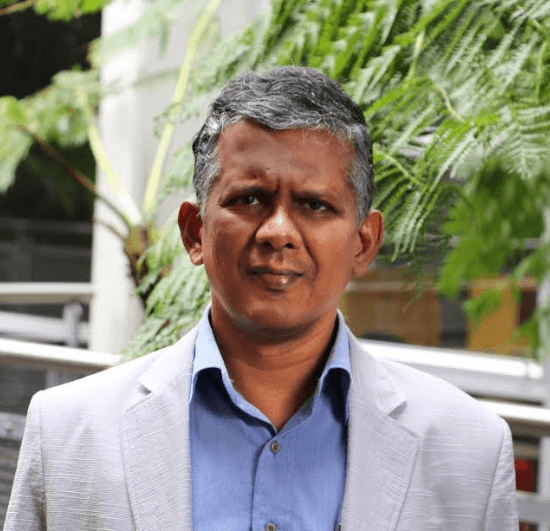
Mahinda Vilathgamuwa (Fellow, IEEE) received his B.Sc. degree from the University of Moratuwa (Sri Lanka) in 1985 and Ph.D. degree from Cambridge University (U.K.) in 1993, both in electrical engineering. Dr. Vilathgamuwa is currently the PELS Liaison for the Asia/Pacific region and is active in the IEEE Singapore Section.
Read More
Work History:
1993-2013: Nanyang Technological University (Singapore)
2013-Current: Queensland University of Technology (Australia)
Achievements:
– Member of the IEEE Power Electronics and Drives Systems Conference (PEDS) Organizing Committee (since 1994)
– Member of the IEEE Southern Power Electronics Conference (SPEC) Organizing Committee (Technical Committee Chairman in 2016 and 2018, Co-Chairman in 2023, Chairman in 2024)
– Published over 300 research papers, one book, and two book chapters
– Secured two patents
– Supervised over 25 Ph.D. and 16 M.Sc. students and 12 research fellows
– Technical Committee Chairman of the IEEE ECCE-Asia (2021)
Research Interests: Battery storage, Electrical drives, Electromobility, Power electronic converters, Wireless power
Presentations
Recent Developments in Wireless Power Transfer Systems for Ventricular Assist Devices/Artificial Hearts
Recent Development in Wireless Power Transfer Systems for Ventricular Assist Devices/Artificial Hearts
The number of patients with serious heart failure has been steadily increasing. Therapies
based on Ventricular Assist Device Systems (VAD) and Artificial Hearts (AH) are considered
as standard treatment options for patients with severe heart failure. The potential of serious
infections associated with the percutaneous driveline is a major issue with the current VADs
and AHs. Wireless Power Transfer Systems (WPTS) are proposed as a potential solution to
eliminate the through-skin driveline. In this lecture, new coil structures and control methods
for WPTS based VADs and AHs are presented.
Degradation Conscious Optimal Control of Li-ion Batteries
Degradation Conscious Optimal Control of Li-ion Batteries
Li-ion battery cells tend to degrade due to aging or cycling. One main cause of the degradation
is the formation of solid electrolyte interface (SEI). The formation of SEI causes reduction in
Li-ions availability, increase in the internal resistance and self-discharge of cells. More
advanced battery management systems (ABMS) use mathematical cell models for state
estimation and control strategy design. This lecture discusses recent developments in ABMSs,
that minimize the cell degradation and energy losses in the interfacing converter, leading to a
reduction in the rate of capacity loss in the battery pack and the maximum battery pack
utilization.
Region 1-6 (USA)
Al-Thaddeus Avestruz (Univ. of Michigan, USA)
Presentation Topics
RDL-1: Direct Digital Modeling and Control of Power Electronics
RDL-2: Advances in Wireless Power Transfer
RDL-3: Opportunities and Challenges in Second-Use Battery Energy Storage Systems
Mehrdad Ehsani (Texas A&M Univ., USA)
Presentation Topics
RDL-1: A Global Perspective on Sustainable Energy and Transportation
RDL-2: An Overview of High voltage DC Power Transmission
Tanya Gachovska (Univ. of Nebraska, USA)
Presentation Topics
RDL-1: Current Status and Future Prospects of GaN Power HEMTs
RDL-2: SiC and GaN Devices and Some Applications
Brandon Grainger (Univ. of Pittsburgh, USA)
Presentation Topics
RDL-1: Modern Power Conversion Solutions – From Electric Power Grids to Aerospace Power Applications
RDL-2: Multiport Converter Designs: Modeling Considerations and State Plane Analysis Approaches for Improved Thermal Performance of SiC Devices
Madhav Manjrekar (Univ. of North Carolina, USA)
Presentation Topics
RDL-1: Modern Electrical Machines for Transportation: Theory & Analysis and Modeling & Simulations
RDL-2: Grid Forming Inverter
RDL-3: Smart DC Fast Charging Infrastructure
Sudip Mazumder (Univ. of Illinois – Chicago, USA)
Presentation Topics
RDL-1: Control of Power Electronics Systems Using Predictive Switching Sequences and Switching Transitions
RDL-2: Nonlinear Analysis of Power-Electronics Systems and Networks
RDL-3: Differential Mode Power Converters: A Universal Solution
Chris Mi (San Diego State Univ., USA)
Presentation Topics
RDL-1: Reuse and Recycling of EV Batteries
RDL-2: Electric Vertical Take-Off and Landing Airplanes
RDL-3: Wireless Power Transfer – From Science Fiction to Reality
Indumini Ranmuthu (Texas Instruments, USA)
Presentation Topics
RDL-1: Data Center VR Power Delivery Solutions
Jinia Roy (Univ. of Wisconsin – Madison, USA)
Presentation Topics
RDL-1: Non-isolated High Gain DC-DC Boost Converter
RDL-2: WBG-based Transformer-less PV Inverter
Pradeep Shenoy (Texas Instruments, USA)
Presentation Topics
RDL-1: Challenges and Opportunities in Automotive Power Electronics
RDL-2: Common Mistakes in DC-DC Converters and How to Fix Them
RDL-3: Power-Conversion Techniques for Complying with EMI/EMC Requirements
Region 7 (Canada)
None available
Region 8 (Europe & Africa)
Jost Allmeling (Plexim GmbH, Switzerland)
Presentation Topics
RDL-1: Efficient Models for Power Converters in Real-time Simulation
RDL-2: Model Continuity from Offline Simulation to Real-time Testing
Ilknur Colak (Schneider Electric-Secure Power Division, France)
Presentation Topics
RDL-1: Solid State Transformers: Challenges and Applications
RDL-2: Insulation and Coordination Design Steps for MV Power Electronics Applications
Petros Karamanakos (Tampere Univ., Finland)
Presentation Topics
RDL-1: Model Predictive Control of Power Electronic Systems: Methods, Results, and Challenges
RDL-2: Finite Control Set Model Predictive Control: Design Guidelines to Maximize the System Performance
RDL-3: Optimal Modulation and Control for Power Electronic Systems
Ivana Kovacevic-Badstuebner (ETHZ, Switzerland)
Presentation Topics
RDL-1: Electromagnetic-Circuit Modeling for Advanced Power Semiconductor Devices
RDL-2: Design of SiC Power MOSFET Packages based on Multi-physics Modeling
Dimosthenis Peftitsis (Eindhoven University of Technology, Netherlands)
Presentation Topics
RDL-1: Silicon Carbide Power Semiconductors: Device Modelling, Gate Drivers and Applications
RDL-2: Reliability Assessment of High-power Semiconductor Devices and Challenges on Lifetime Modeling at Low Stress Cycles
RDL-3: Online Estimation of Lifetime Consumption for High-power IGBT Modules under Stochastic Mission Profiles
RDL-4: Thermal Design and Efficiency Improvement in Medium-voltage Solidstate DC Breakers
Miroslav Vasić (Poly. Univ. of Madrid, Spain)
Presentation Topics
RDL-1: GaN-based Multi-MHz Applications and the Challenges in Front of Us
RDL-2: Key Aspects of the Design and Control of Inductive Power Transfer Systems
Region 9 (Latin America)
Fernando Luiz Marcelo Antunes (Fed. Univ. of Ceara, Brazil)
Presentation Topics
RDL-1: Multilevel Converters
RDL-2: Power Electronics for Fuel Cells
RDL-3: DC-DC Converters
RDL-4: Inverters for Distributed Generation
RDL-5: Power Electronics for Electrolyzers
Jaime Arau (Natl. Center for Research and Tech. Development-CENIDET, Mexico)
Presentation Topics
RDL-1: New Trends in Multiport Power Converters for Energy Harvesting/Storage Systems
RDL-2: The Important Role of Power Electronics for the Creation of a Sustainable World
RDL-3: Towards the Successful Publication of Technical Journal Articles in the World of Engineering
Javier Alveiro Rosero Garcia (Natl. Univ. of Colombia, Columbia)
Presentation Topics
RDL-1: Transformación organizacional por transformación Digital
RDL-2: Medición inteligente en redes de distribución de energía
Region 10 (Asia-Pacific)
Kaushik Basu (IISc – Bengaluru, India)
Presentation Topics
RDL-1: Modeling the Switching Behaviour of WBG based Power Devices
RDL-2: Efficient and Compact Power Electronic Converters for Future Utility-Scale Grid Integration of Renewables
RDL-3: Pulse Width Modulation Techniques of Inverter Fed Asymmetrical Six-Phase Machine Drive
Honnyong Cha (Kyungpook Natl. Univ., Korea)
Presentation Topics
RDL-1: Applications of Magnetics for Power Conversion Systems
RDL-2: Power Converter Topologies
Kosala Gunawardane (Univ. of Tech. – Sydney, Australia)
Presentation Topics
RDL-1: Integration of Fuel Cell Technologies into DC Microgrids
RDL-2: Demand-side Management of Offshore Hydrogen-based DC Power Systems
RDL-3: Benefits of Supercapacitance for Designing High-efficiency Power Converters: Supercapacitor-assisted Low Dropout (SCALDO) Regulator Technique
Weihao Hu (IEEE PELS Member)
Presentation Topics
Coming soon
Dong Jiang (Huazhong Univ. of Sci. and Tech., China)
Presentation Topics
RDL-1: Eletromagnetic Interference (EMI) Mitigation Through Advanced Pulse Width Modulation
RDL-2: Power Electronics Converters for Open-Winding Motor Drives
Kyo-Beum Lee (Ajou Univ., Korea)
Presentation Topics
RDL-1: Reliable Design of a SiC Inverter for Motor Driving Systems
RDL-2: Dual Motor Driving System with a Single Inverter
Hong Li (Beijing Jiaotong Univ., China)
Presentation Topics
RDL-1: Modeling and Stability Analysis in Time Domain of Power Electronic Converters System
RDL-2: Chaotic Pulse Width Modulatoin in Power Electronics System: from Theory to Applications
RDL-3: Programmable Topology Deduction Algorithm for Non-isolated DC-DC Converters based on Graph Theory
Ke Ma (IEEE PELS Member)
Presentation Topics
Coming soon
Mahesh Kumar Mishra (Indian Inst. of Tech. – Chennai, India)
Presentation Topics
RDL-1: Power Quality Features of Voltage Source Inverter in a Microgrid System
RDL-2: Microgrid Control and Active Distribution Systems
RDL-3: Power Electronics Applications in Microgrid Connected Power Systems
Dongyuan Qiu (IEEE PELS Member)
Presentation Topics
Coming soon
Kalpana R. (Natl. Inst. of Tech. – Tiruchipalli, India)
Presentation Topics
RDL-1: Battery Management Systems for Electric Vehicle Applications
Shinzo Tamai (Toshiba Mitsubishi-Electric Industrial Systems Corp., Japan)
Presentation Topics
RDL-1: PWM Control of Three-Level Neutral Point Clamped Converters for High Power Applications
RDL-2: Large Capacity Converter Technologies for Stabilizing AC Power Transmission Systems
Laili Wang (IEEE PELS Member)
Presentation Topics
Coming soon
Yijie Wang (Harbin Inst. of Tech., China)
Presentation Topics
RDL-1: An Underwater Simultaneous Wireless Power and Data Transfer System for AUV With High-Rate Full Duplex Communication
RDL-2: A Multi-Segment Compensation Method for Improving Power Density of Long-Distance IPT System
RDL-3: Design of a Strong Robust Wireless Power Transfer System With Wide-Range Output Regulation Based on Dual-Band Architecture
Xinke Wu (IEEE PELS Member)
Presentation Topics
Coming soon
quick access
Celebrating and Honoring Our Members Highest Achievements
Nomination & Selection Process
Read our guidelines for the selection of Distinguished Lecturers and the operation of each program.